A feminist film?
The Substance has been hailed as a feminist film and a masterpiece. But the modern “feminist” dog whistles in the film add up to mere seconds and don’t interfere with the overall watchability. In fact, the assertion that this is a feminist film is the final unmasking of true feminism and a claim of non compos mentis for women in general.

After countless female-produced, female-directed, and female-led films in the past decade—especially with an unprofitable push in the last five years—one finally stuck! The Substance. Demi Moore still has undeniable star power and is impressively physical in this role. Margaret Qualley actually does a lot of the heavy lifting and dominates much of the screen time, which surprised me given the praise Demi is receiving. Both actresses do a good job acting as dual anchors in an abstract fever dream. The cinematography is stylish, and the special effects blend CGI and practical effects quite nicely.
After watching the film I wondered how is this feminist? So I asked ChatGPT, which towed the party line as always.
The Substance is considered a feminist film because it critiques societal pressures on women, particularly in relation to aging, beauty standards, and the entertainment industry. Starring Demi Moore, the film explores themes of bodily autonomy, identity, and the extremes women are often pushed to in order to maintain youth and relevance. It uses horror as a metaphor for the dehumanizing effects of these pressures, making a powerful statement about the commodification of women’s bodies. The film’s approach aligns with feminist horror traditions that challenge patriarchal structures and expose the anxieties surrounding female agency.
ChatGPT
I’d argue this popular take is exactly wrong.
Liz represents the “everywoman” in her emotional struggles and battles with reality. Reality being a woman’s #1 enemy… I suppose. Of course, Liz isn’t every woman, but she represents a large portion of, let’s say, “secular” women.
The shreds of overt feminist content come from the few men in the movie. Demi’s character, Liz Sparkle, has seconds and minutes with each of them.
Most of these men are oversimplified, shallow stereotypes—except one.
The main male “antagonist,” if you can even call him that, is “sloppy shrimp-eating guy.” He keeps reminding Liz how important it is that a woman is beautiful.
This is a sad reality women face: they get judged on their looks constantly—especially in the media. So getting old and aging out of a job sucks. We can agree that is a truth, even if it’s not the truth.
The second guy is a well-meaning simp. He remembers Liz from grade school and always had a crush on her—before she was a star. She was perfect to him. But he’s a dweeb.
And for a brief moment in the film, there’s a good-looking, well-muscled, normal guy who is nameless. We’ll call him hairy butt guy. Hairy butt guy is eventually scared off when Liz has a meltdown and sounds demonic. He doesn’t even put his pants on and high-tails it out of the movie when he realizes she is messed up.
The only guys mentioned in reviews and “remembered” by feminists are guys one and two. The normal guy (who runs for the hills) is pretty much ignored.

A telling admission and revelation.
There’s also a brief fling with a total asshole who rides a motorcycle. He has very few lines and praises Sue, Liz’s alter ego, for being beautiful.
Throughout the film, Liz’s frustration with the reality of her dwindling relevance drives her deeper and deeper into drug misuse.
This, I suppose, is society’s and sloppy shrimp-eating guy’s fault—at least if you’re a shallow feminist. If that’s what they get out of the film, we have evidence of something they really don’t want to hear. More on that at the end.
Liz focuses her energy on appeasing bike jerk and sloppy shrimp guy while totally ignoring the well-meaning dweeb. This is something critical male thinkers have been pointing out for quite some time online as a major downfall in Gen X, Millennial, and now Gen Z women—or wahmen, as they are sometimes called.
But that isn’t Liz’s fault… or is it?
The film isn’t a horror film. It follows the template of a comedy far more closely, but there are few laughs. It’s more or less a sci-fi fable and a remake of The Nutty Professor—but for women, by women, and it’s much darker and nastier. Because men?
Early on, Liz is taught the method of using this drug called the substance. It has strict rules, and she is warned that if she doesn’t follow the protocol, bad things will happen.
Unflattering reality #1: It doesn’t work out because she does what she wants.
Liz misuses the substance for a couple of reasons. First, she hates and abuses herself. Nobody is as rough on Liz as Liz is. She is her own worst enemy, not the men.
Unflattering reality #2: Women blame men for their own issues.
Liz becomes a childless-spinster shut-in and only goes out as her young, hot alternative identity, Sue.
This is a great allegory for addiction to drugs, which make people more confident and therefore social and desirable. It could also be interpreted as the separation between a highly edited and manipulated social media persona and the sad, lonely woman behind the thot.
However, it can also be seen as the harsh realities career women face when they are left with trophies and mementos, but no husband or children to care for them in their old age. In China they are referred to as “leftover women”.
Of course, with the film being labeled feminist, it’s safe to say most women were too shallow to pick up on that. Instead, they are apparently responding to “Sloppy Shrimp Eating Guy Bad” sentiment. Well… at least they are consistent in not seeing the big picture.
Secondly, Liz isn’t a very disciplined character. This manifests in a scene where she admonishes herself (from the perspective of Sue) for over eating and being a slob at home.
With multiple warnings and early scares, as Sue, she deliberately misuses the substance because she doesn’t want to stop partying. Liz then resents herself as Sue for this transgression.
This speaks to a sad reality that males have pointed out with modern secular women, which could lead to the extinction of Western civilization. A significant portion of modern women doll themselves up with varying degrees of success, party until their eggs are gone, and then hate that they are alone after ignoring everything but their wants and telling everyone else to take good advice and ideas and “shove it.” All while acting as if they know best and that their worldview should be mandatory. They all vote “liberal” and for larger governments because, ultimately, they know deep down they don’t want to be responsible—and basically cannot be—due to poor habits and a lack of self-awareness. They want the government to be their “daddy”.
This reality is showcased in the film, but clearly, women aren’t catching on. Otherwise, I doubt it would be called a feminist masterpiece—because it’s really not.
Throughout the film, Liz fights for her right to party without doing any soul-searching or personal growth. Her character becomes more bitter and angry and grows to hate her young, hot alter ego as much as she hates herself.
No matter how nice the Dweeb is, he is invisible. And no matter how much attention she gets as Sue, she hates herself and doesn’t work to make herself more than what she is—a thot.
Whose fault is that? I guess Sloppy Shrimp Eating Guy, who represents media more than men. Sorry, ladies, but the number of hot, nice guys with dumpy chicks proves Sloppy Shrimp Eating Guy certainly isn’t the everyman—although dishonest feminists would tell you otherwise.
Which brings us to the third dark reality.
#3: You can’t have it both ways.
I guess that’s the horror aspect for women because modern feminist liberal women want it both ways. But that isn’t reality—which is why reality is their #1 enemy. Even though they see Sloppy Shrimp Eating guy as their “Darth Vader”.
Are Feminists really embracing this film as a feminist masterpiece?
Why?
Liz is the most shallow and harmful character in the film. She doesn’t take responsibility for her actions, constantly appeals to the worst men in the film, gives in to her lowest impulses, and shows a total lack of positive self-growth.
By hailing this as a feminist film, feminists are effectively embracing the most shallow elements of the film and taking a very surface-based approach to viewing it: “Sloppy Shrimp Man bad.”
In reality, this film highlights a woman’s shallow decision-making, her inability to connect with decent people, her deadly pursuit of pleasure, and failure to actually solve any of her own problems.
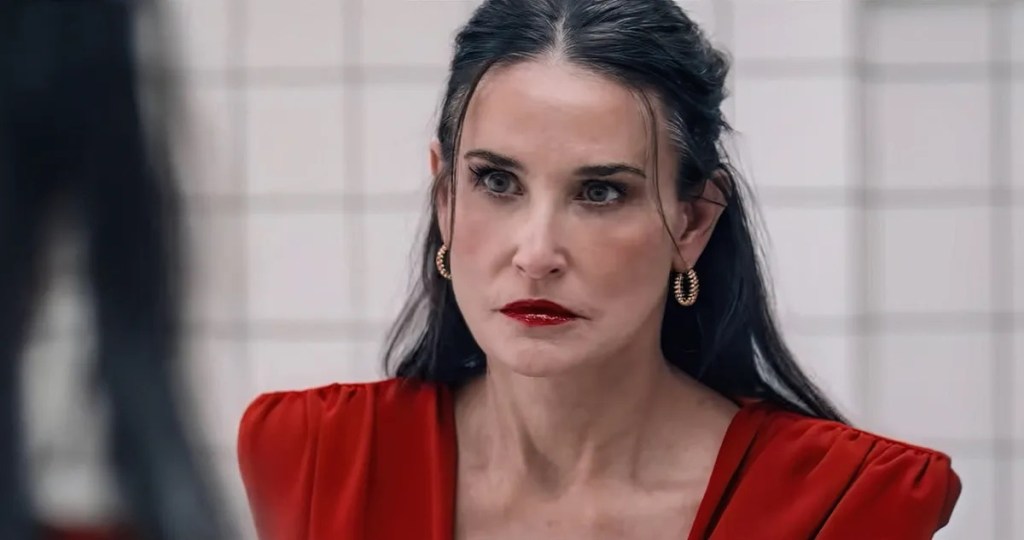
If feminists think this is feminist, then that says more than any right-wing Twitter troll ever could. And if they don’t see the deeper meaning, are they effectively revealing they shouldn’t be in charge of their own lives? If they choose drugs, men that are assholes, and put themselves in dangerous situations without supervision, then aren’t they admitting they need to be supervised?
All in all, the movie is solid. Certainly the best female-made film of the year—or the last five years. I was initially turned off by the feminist praise.
But ultimately, that’s just a meme. They say it’s feminist because there are women in it and it’s made by women.
Thus proving they are as shallow and hopeless as Liz—who they relate to because “Sloppy Shrimp Eating Man bad.”
It’s worth a watch, even if we aren’t all seeing the same film.
 Mixed Media Magazine