Unlocking the Health and Flavor Secrets: Dive into the Rooibos Tea Craze with Mixed Media Magazine’s Comprehensive Guide – Your Gateway to Antioxidants, Vitamins, and Wellness Delight!
Photo by Anastasia Belousova We love our Rooibos Tea blended with Blood Orange.
In the ever-expanding world of beverages, one particular tea has captured the hearts and taste buds of the Mixed Media Magazine team – Rooibos Tea. This South African gem has become our latest obsession, and for good reason. Beyond its delightful flavor, Rooibos Tea boasts a myriad of benefits that make it a standout choice for both health enthusiasts and those seeking a refreshing sip.
At the forefront of our fascination is Rooibos Tea’s impressive antioxidant content. Packed with powerful antioxidants, this tea has the potential to combat oxidative stress in the body, promoting overall well-being. In a world where the quest for a healthier lifestyle is paramount, Rooibos Tea emerges as a flavorful ally in the fight against free radicals.
Not just satisfied with its antioxidant prowess, Rooibos Tea goes above and beyond by being rich in essential vitamins. From vitamin C to various minerals, indulging in a cup of Rooibos is like treating your body to a nutrient-packed elixir. It’s a guilt-free pleasure that aligns with our commitment to wellness.
But our admiration doesn’t stop there – Rooibos Tea is hailed for its purported benefits for the complexion. Advocates claim that regular consumption can contribute to healthier skin, giving enthusiasts another reason to incorporate this tea into their daily routine. Who knew that a delightful tea could be a secret weapon for radiant skin?
The fascination intensifies as we delve into Rooibos Tea’s potential to alleviate symptoms of irritable bowel syndrome (IBS). With reported digestive benefits, this tea has become a comforting choice for those seeking relief from digestive discomfort. The soothing properties of Rooibos extend beyond taste, offering a holistic approach to well-being.
Furthermore, the anti-inflammatory properties attributed to Rooibos Tea add another layer to its allure. For individuals navigating the challenges of inflammation-related issues, the inclusion of Rooibos in their beverage repertoire may offer a soothing and flavorful respite.
We absolutely loved this video from a licensed doctor!
In a world where minimalism is gaining traction, the art of decluttering has become a mindful practice, and at Mixed Media Magazine, we’re diving into the transformative concept of an “in-and-out” approach. Let’s bid farewell to the pitfalls of being a collector, often a euphemism for hoarding, and instead, embark on a journey of simplicity and purpose.
The allure of acquiring new things can be enticing, but what if we told you that the key to a clutter-free life lies in a simple exchange? Picture this – you buy a new shirt, and in return, bid adieu to an older one. It’s a seamless transition that not only keeps your wardrobe fresh but also ensures that every item serves a purpose. This mindful swap not only curtails unnecessary accumulation but also opens up space for a more intentional and curated collection.
Extend this principle to household objects – whether it’s that quirky mug catching your eye or a decorative item for your home. The rule is simple: bring in something new only when you bid farewell to an old counterpart. This way, each addition to your living space is a conscious choice, contributing to a clutter-free and harmonious environment.
Consider adopting a ‘use it until it’s no longer usable’ philosophy. Before succumbing to the temptation of a new item, assess the condition of its predecessor. That favorite mug with a funny look might be irresistible, but hold off until its chipped or stained counterpart is ready for retirement. This not only prevents unnecessary accumulation but also encourages a thoughtful evaluation of our belongings.
The in-and-out approach isn’t just about decluttering; it’s a mindset shift towards mindful consumption. It’s a conscious decision to surround ourselves with items that bring joy and purpose rather than contributing to the chaos of excess. By adopting this approach, we not only declutter our physical spaces but also declutter our minds, fostering a sense of clarity and simplicity.
In a world that often encourages accumulation, let’s embrace the elegance of a curated life. Join us at Mixed Media Magazine on this journey of decluttering bliss, where the in-and-out approach becomes a guiding principle towards a more intentional and fulfilling lifestyle.
Pokemon Snap, A Link to the Past, Super Mario Bros. 3, and Tetris are classic games that are still easily accessible and relatively cheap.
Sonic the Hedgehog 2, Super Mario 64, Final Fantasy 7, Resident Evil: Directors Cut, and Star Wars: Battlefront 2 are also readily available at retro shops and online.
Pong, being one of the earliest games, is a mainstay on various consoles and can be found almost everywhere, making it widely accessible.
Highlights
As time goes on, you might think that it will only get more and more difficult to find some of your favorite classic video games. While that can be true for certain gems like Chrono Trigger, there are still tons of older games that aren’t hard to come by and are relatively cheap.
For whatever reason, it can feel like some classic games will never go away, even if some of them were originally released all the way back in the eighties. Copies of games have to run out at some point, but it seems like these truly never will.
This silly little game about taking pictures of Pokemon was a surprise hit, so you might think it would be a bit rarer to come by these days. While that could be said of the complete in-the-box presentation, it’s certainly not the case for loose cartridges.
Almost every retro game shop seems to have at least one copy of this game available for someone to pick up, and the price is usually somewhere between twenty and forty dollars. Not bad for a game that lets you toss apples at Pokemon for some pretty pictures.
A Link To The Past is one of the all-time classic Zelda games, and it might even be your favorite from the series to this day. Due to its popularity and how long it’s been since its initial release in 1991, no one could be blamed for thinking it might be a rare collector’s item at this point.
While it’s not one of the cheaper games in the Super Nintendo’s library, it is almost always readily available at fan events, retro shops, and even online. Usually, a copy will set you back a bit over fifty bucks on the low end, but the game does always seem to be lurking around for fans of the series.
When most people name a classic from the NES, one of the first titles that will spring to your mind is Super Mario Bros 3. The classic platformer still holds up to this day, making it a fairly widely sought-after game to add to a collection.
It might be due to the fact that the game has been re-released so often, but it really isn’t tough to find the original NES copy. If you’re lucky, a copy of this game will only set you back around twenty bucks, and it’s pretty much always available anywhere that sells classic games.
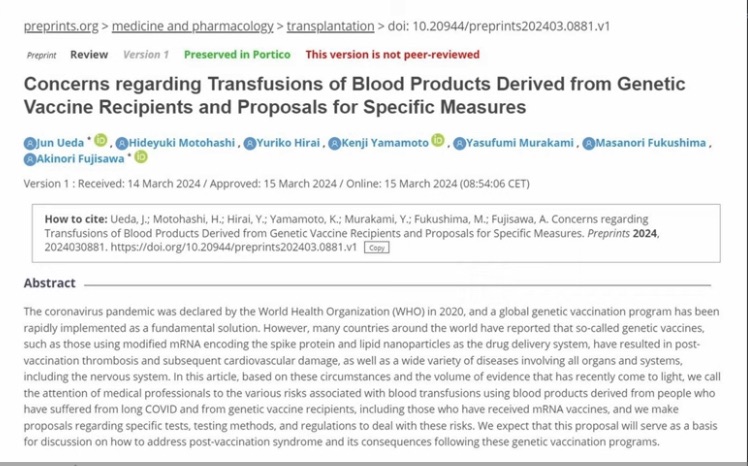
As more of the population becomes vaccinated, cases of hematological side effects of vaccinations have become more apparent. One of the more dangerous side effects includes thrombocytopenia and thromboembolisms due to vaccination.
The vaccine industry and its government and scientific partners routinely block meaningful science and fabricate misleading studies about vaccines.
They could not do so, however, without having enticed medical journals into a mutually beneficial bargain. Pharmaceutical companies supply journals with needed income, and in return, journals play a key role in suppressing studies that raise critical questions about vaccine risks—which would endanger profits.
“when CDC officials including Coleen Boyle, Marshalyn Yeargin-Allsopp, Joanne Wojcik, and Diana Schendel became aware in 2009, that Poul Thorsen failed to obtain legally required permission for the autism biological and genetic data projects, these CDC employees participated in a cover-up with the Danish grantees.”
CDC suppressed the findings of its large-scale 1999 study documenting a causal relationship between exposure to the vaccines containing Thimerosal (ethylmercury) and autism. The study found that exposure to Thimerosal during the first month of life increased the relative risk of autism 7-fold (7.6).
CDC also suppressed the original findings of another of its own studies that found a 340% (3.6) relative increased risk of autism for African American male babies following MMR vaccination in accordance with the CDC-recommended Childhood Vaccination Schedule.
CDC scientists worked in concert with CDC-commissioned Danish scientists to conceal the significantly reduced cases of autism in Denmark following the removal of Thimerosal in 1992.
The internal documents obtained by Robert Kennedy Jr and the World Mercury Project, provide evidence that high ranking CDC scientists committed massive fraud to protect CDC’s Childhood Vaccination Schedule to ensure high vaccination rates.
The other authoritative sources include the U.S. Grand Jury’s criminal indictment of Dr. Poul Thorsen (2011) on 13 counts of fraud and 9 counts of money laundering. Thorsen was the principal CDC-commissioned psychiatrist in the Danish epidemiological studies. In addition to his failure to obtain ethics approval for studies published by The New England Journal of Medicine(2002), and by the Journal of Autism and Developmental Disorders (2010), Thorsen’s studies are shown to have been manipulated through fraudulent means. What’s more, he was criminally indicted by a US Grand Jury (2011) on 22-counts of fraud – including document forgeries – theft, embezzlement, and money laundering.
Get the facts about the Covid-19 Vaccine 💉 on a video about Ozempic. Talk about reaching.
A recent report ‘Canadian Gov’t Database Reveals Catastrophic Reproductive Damage to Men and Women Post-mRNA Vaccine Rollout’ authored by Naomi Wolf and Amy Kelly of Daily Clout analyzed data issued by the Canadian government’s Ontario Health Insurance Plan (OHIP). They conducted a granular analysis of six million patients between the years 2015 through 2022, before, during and after the Covid vaccine rollout, and found a massive spike in reproductive health issues post-shot.
“This dataset shows clear evidence of an increased numbers of patients who sought medical care after the public rollout of COVID-19 vaccines in Canada, for reproductive disorders,” the report said. “The categories of reproductive disorders that showed increased starting in 2021 ranges from male infertility (low- and no-sperm count) to pelvic inflammation to menstrual disorders and post-menopausal bleeding to missed and incomplete abortions, or what is commonly known as miscarriages.”
Being that over eighty-five percent of those residing in Ontario are at least double-vaccinated against Covid-19 and fifty percent of Ontario residents are triple-vaccinated, the post-vaccine effects are based on a large dataset.
A recent medical study documented how workers at the Cleveland Clinic who received the Covid vaccination garnered a low level of protection against the virus, yet attained a high level of Covid illness.
“The 2023-2024 formula COVID-19 vaccine given to working-aged adults afforded a low level of protection against the JN.1 lineage of SARS-CoV-2, but a higher number of prior vaccine doses was associated with a higher risk of COVID-19,” the study said in the ‘Conclusion’ section.
“Dr. Renfield” or Redfield rather. Discusses loss of credibility and side effects of the vaccines.
Discover the Beauty of New England Through Jon Meyer’s “Love Poems From New England”
If you’re looking for a way to experience the beauty and wonder of New England without leaving your living room, look no further than Jon Meyer’s “Love Poems From New England”. This collection of poems and photographs, presented in a stunning hardcover book, captures the essence of each New England state in a way that will transport you to the very places that inspired them.
The poems are short, but impactful, and are grouped by state, so you can experience the unique flavor of each one. Even if you’ve only visited a few of these states, you’ll find yourself transported back there as you read, and you’ll be inspired to visit the ones you haven’t yet explored.
But it’s not just the words that will transport you – the accompanying photographs, all taken by the author, will give you a vivid visual representation of each location. And if you’re curious about how each poem and photograph came to be, Meyer provides insight into his creative process, making this book not just a work of art, but a behind-the-scenes look into the mind of an artist.
It’s hard to choose just one favorite from this collection, but “No Record Keeping” stands out for its message of living in the present moment:
“There is no record Keeping or scorecard On the path to where You live. Once there, Past and future disappear.”
Meyer’s accompanying insight encourages readers to take a quiet stroll along an idyllic road, appreciating the beauty of the moment without the pressure of striving or keeping score.
Overall, “Love Poems From New England” is a five-star work of art that belongs on every coffee table. It’s the perfect book to enjoy on a quiet, rainy afternoon with a cup of tea, allowing you to experience the magic of New England no matter where you are.























 Mixed Media Magazine