THE BOOK REPORT: Love, Life and Mother Nature: A Poet’s Tribute to Nature’s Healing Powers
By Krysta Lavigne
As someone who loves books, interiors, and quiet moments of reflection, I’m always drawn to works that offer both beauty and insight. Love, Life and Mother Nature by James C. Glassford is one of those rare finds.
James, a retired physician living on Vancouver Island, has spent a lifetime in close communion with the natural world. His poems celebrate nature’s restorative powers, showing how it can comfort, inspire, and even heal. What struck me most is his openness. It’s refreshing to see a medical professional so candidly share his sentiments about the natural world and its role in our emotional well-being. In our increasingly artificial and hectic lives, much of the malaise we feel likely stems from our disconnection from nature. James reminds us how grounding it can be to simply observe, reflect, and appreciate.
The book is a collection of poems that traverse love, relationships, wildlife, and the everyday. The accompanying photographs, taken by his wife, lend a gentle visual rhythm to the words—though I found the layout could have been more integrated, it does not diminish the overall charm of the collection.
Reading these poems, you feel both the peace and the urgency of the natural world. Wolves, eagles, and intertidal pools appear alongside reflections on human life, highlighting the interconnectedness of all things. James’ final poem circles back to environmental care, leaving readers with a sense of responsibility alongside gratitude.
Love, Life and Mother Nature is a delightful reminder that poetry need not be inaccessible to be profound. Even readers who do not typically pick up poetry may find themselves compelled to linger, reflect, and return again.
Some weird and interesting tidbits for audiophiles and pop culture fanatics alike.
We have collected some interesting and informative videos that will delight your ears, amuse you, and maybe even teach you something new about music and sound.
When the national news called for a snow storm and everyone got ready to get snowed in I prepared… to make crab dip.
When the storm didn’t deliver as much precipitation as anticipated, people came over for a movie and it turned into a party.
Crab Dip
Another great idea from Tastes Better From Scratch, this crab dip will be a people pleaser at parties or as a light meal. Variations include a crockpot version of the recipe.
For my rendition, which people go crazy for I substituted Old Bay seasoning for…
For 3 regular eating spoons full of paprika (couldn’t find measuring spoons).
Then 1 eating spoon of ground black pepper
And 1 eating spoon of chilli powder.
In fact, anytime it said teaspoon I did an eating spoon amount instead.
I also only used 3 cans of shredded white crab meat. So you don’t have to spend a fortune on pounds of fresh lumped crab meat to make this a crowd pleaser folks.
Instead of shredded cheddar (which I had lots of) I used a finely shredded 3 cheese blend that needed to be used up. I added extra by topping it with cheese in the crock pot, it melted nicely and added a bit of extra visual appeal for guests.
TIP: Instead of beating the cream cheese, I left it to sit at room temperature, removed it from the foil, added it to a microwave safe bowl and zapped it for a few seconds (use your best judgement), that softened it enough to stir in with everything else.
A added the wet ingredients to the soft stirred cream cheese little by little and then added the dry and chopped items. This saved time and effort.
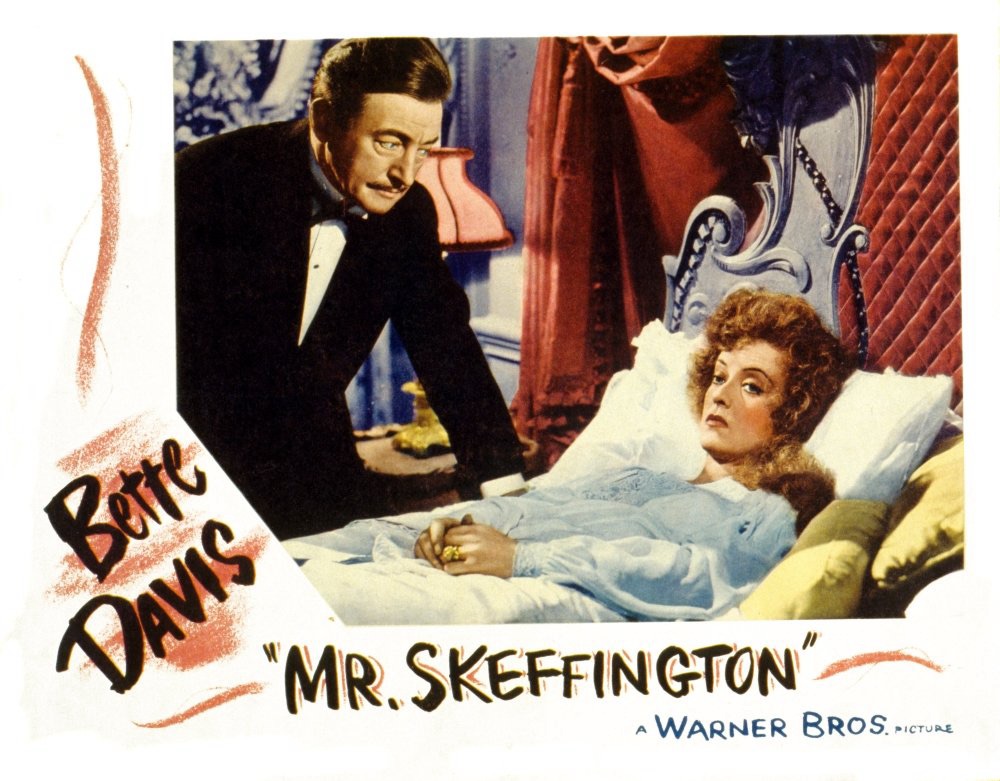
Mr. Skeffington is from 1944, but it sums up modern hoes and simps with timeless accuracy.
Even though it’s titled Mr. Skeffington the movie stars Bettie Davis who chews up the scenery as a woman who doesn’t grow out of her hoe phase until diphtheria leaves her looking CHOPPED and bald.
That’s when the story really begins. She tries and fails to get guys to simp for her and realizes she is haggard AF and there is no turning back.
The film tackles relationships between men, hoes, the women men marry instead of the hoes and the hoes, the kids of hoes, and the hoe’s husband…
How will it end? You’ll have to watch.
Warning: Don’t watch the trailer it makes the movie look stupid and has nothing to do with the plot.
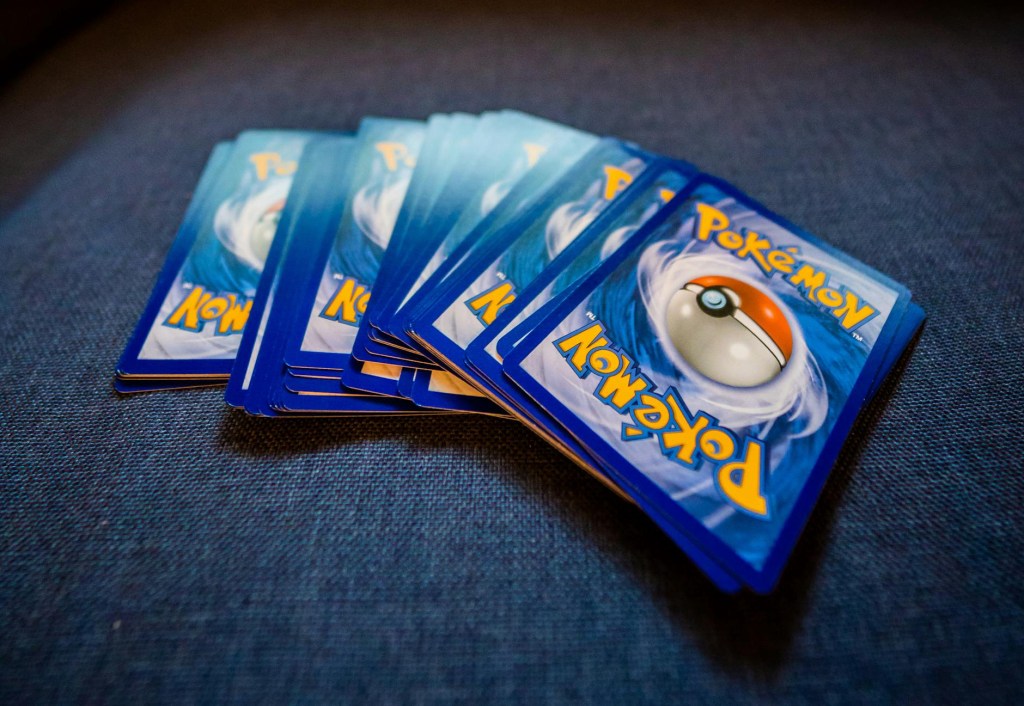
3 Reasons People Think a TCG App Can Increase Interest in Physical Cards
1. New Players Get Introduced to the Hobby Many observers say that mobile/digital TCG apps serve as a kind of massive marketing engine for the physical game. Players who try and enjoy the digital version often become curious about owning the real cards themselves — sometimes specifically seeking out physical packs once they’ve fallen in love with certain cards or mechanics.
2. Apps Spark Broader Engagement & Community Growth Digital versions can expand the audience beyond the core hobbyists — reaching casual gamers or people who might never have bought a booster box. A larger player base means more interest in tournaments, local game stores, and social play — all of which feed back into physical card demand.
3. Onboarding Tool That Teaches the Game TCG apps often lower barriers to learning than physical games. Because they automate rules, deck-building, and matchmaking, newbies can more easily understand and enjoy the game. Once comfortable digitally, many want to translate that skill into the physical space — which can lead to real card purchases.
3 Concerns That Digital Might Hurt Physical Card Sales or Collector Culture
1. Digital Convenience Can Replace the Desire to Buy Physical Packs Several players report that the ease and instant gratification of a digital app can diminish the desire to purchase real packs. Some say they now feel no need to buy physical cards at all after satisfying their collecting itch online — especially if the digital rewards or pack openings are frequent or fun enough.
2. Digital Cards Lack Tangible Value for Collectors A common criticism is that digital cards have no real world value. Physical cards can be displayed, graded, sold, or resold — and there’s a sense of ownership that digital can’t match. With digital, ownership depends on an online account or server continuing to operate — if it doesn’t, the collection could disappear.
3. Transitioning Players May Skip Physical Collecting Altogether Community discussions reflect frustration that digital versions sometimes do enough of what players love that they don’t feel compelled to dive deeper into collecting — especially if they’re not invested financially or socially in the physical community. This potentially draws time and attention away from cafes, card shops, and live events where the physical game thrives.
🧠 Overall Picture
Digital TCG apps aren’t just a mirror of the physical version — they change how people experience the game. For some, that means increased excitement and discovery that spirals into physical collecting. For others, it means a satisfying, cheaper, or more convenient alternative that can pull attention and spending away from traditional cards and the collector culture built around them.
The real impact seems to depend on how well game companies balance digital fun with incentives to engage in the physical side — and whether digital and physical experiences complement rather than replace one another.
The global disruptions we have seen in recent years are frequently presented as a chaotic sequence of events: a ‘pandemic’, inflation, energy shortages and war.
Little wonder that most people are confused. However, a structural analysis reveals a more deliberate controlled demolition of the 20th-century social contract.
We are witnessing a transition from a productive capitalist model, which required a healthy mass labour force, to what Yanis Varoufakis calls a techno-feudalist order.
The engine of this transition was a desperate financial stabilisation strategy carried out by means of a public health event. As identified by Professor Fabio Vighi, the global financial system reached a point of terminal instability in late 2019, evidenced by the collapse of the US repo market (where banks lend to each other).
By freezing the real economy through lockdowns, central banks performed massive liquidity injections to save the banking-finance tier. If that money had entered a functioning economy, it would have triggered hyper-inflation. By keeping the population at home, the elite performed a stealth bailout that preserved the dominance of the financial class by sacrificing the productive middle class.
However, a geopolitical reset also had to take place. For decades, Germany’s economy relied on three pillars: cheap Russian gas, high-tech exports to China and a US security umbrella. By late 2025, all three have been fractured. As Prof Michael Hudson notes, the ‘sabotage’ of the Nord Stream pipelines was a structural necessity for the Western financial elite.
If Germany continued to integrate with Russia and China, it would have created a power pole independent of the US dollar. The conflict in Ukraine served a purpose: it resulted in Germany replacing Russian pipeline gas and being forced into a massive build-out of liquefied natural gas (LNG) infrastructure and reliance on LNG from the US. Unlike pipeline gas, LNG must be super-cooled, shipped and re-gasified, a process that is inherently 3–4 times more expensive.
The result is that, in 2025, German industrial output is at its lowest since the 1990s. Heavy industries like BASF (chemicals) and ThyssenKrupp (steel) are relocating to the US or China. Meanwhile, Germany is pivoting from an industrial giant by betting on creating jobs in the likes of the green energy sector (including becoming a ‘hydrogen hub’), semiconductors and microelectronics, robotics and biotech and diverting its capital into a €150 billion annual defence spend.
At the same time, while Germany collapses, the City of London thrives on global volatility. Among other things, the City is the global hub for war risk insurance and energy brokerage. When a pipeline is destroyed or a strategically important shipping lane is threatened, the price of war risk insurance triples. The London insurance market (Lloyd’s) extracts these ‘risk premiums’ from the global economy.
The City’s brokers treat geopolitical instability as a volatile asset class. Even as British households are crushed by energy bills, the financial centre remains profitable by extracting wealth from the very chaos that foreign policy helps to manufacture.
Moreover, the City of London has secured its position as the indispensable middleman of the transatlantic energy pivot. While the physical gas originates in the US and is consumed in Europe, the financial and legal architecture of this trade is almost entirely managed in London.
Commodity brokers and exchanges like ICE (Intercontinental Exchange) in London have seen record volumes in LNG futures and derivatives. These are financial bets on the future price of gas. As volatility increases, the fees and commissions extracted by London-based traders and clearinghouses skyrocket.
More than 90% of the world’s marine insurance, including the specialised, high-premium coverage required for LNG tankers, is underwritten through Lloyd’s. By enforcing strict war risk premiums on any ship entering European waters, London effectively imposes a private tax on every molecule of gas that replaces the lost Russian pipeline supply.
This ensures that while European industry is struggling with high energy costs, the City’s financial firms extract a massive toll from the logistics of the replacement supply.
Of course, the structural readjustment of economies leads to huge social tensions.
This is where the ‘Russian threat’ comes in. It has been elevated to an all-encompassing internal narrative used to manage domestic dissent and to galvanise the public to rally behind the flag. The bogeyman serves a vital psychological function by converting the growing anger of the impoverished into a patriotic duty to endure hardship.
Under this regime of ‘permanent emergency’, any industrial action, protest or systemic critique can be branded as malign foreign influence or subversion, allowing the state to use new, expansive policing powers to suppress internal friction.
To justify the redirection of billions in tax revenue away from failing public services and into the military-industrial complex to create ‘growth’ in a failing economy (a desperate attempt to revive a collapsing neoliberalism—see chapter two here), the state must maintain a high-decibel level of existential fear. In the UK, the Defence Industrial Strategy 2025 explicitly frames militarisation as an engine for growth, using the spectre of a Russian invasion to legitimise a state-subsidised transfer of wealth to high-tech defence contractors.
By manufacturing a permanent state of war-footing, the elite ensure that a main pillar of the economy is the one that directly serves the security of the state, while the population is told that their dwindling healthcare and pensions are a necessary sacrifice for national survival.
In this respect, we also see the changing status of the human being. In the industrial era, the state ‘subscribed’ to the working class, investing in the NHS and education because it required a fit population to drive production. Artificial intelligence, robotics and economic decline increasingly make much of this labour force redundant.
As capital may no longer find the reproduction of labour desirable or profitable, the state withdraws its subscription. The visible rot in the NHS is the result of deliberate divestment. (The UK private health insurance market has surged to a record £8.64 billion, a nearly 14% year-on-year increase.)
If the worker is no longer required for production, the state views healthcare as a ‘non-performing cost’ to be liquidated.
When a population is no longer an asset but a fiscal liability, the state moves from care to managing exit. It’s no accident that we have seen calls for the rapid legalisation of assisted suicide across the West. It might also help to explain the prescribing of midazolam and do not resuscitate orders in care homes during the COVID event. Data shows that the UK government purchased vast quantities of midazolam (two years’ worth of stock in just two months) in early 2020.
In 2025, official impact assessments noted that legalising assisted dying would result in “considerable cost savings” for the NHS and state pension system—estimated at up to £18.3 million within a decade for pensions alone. The Terminally Ill Adults (End of Life) Bill Impact Assessment (May 2025) officially quantified the ‘benefits and pensions’ impact. It estimated that by year 10, the state would save roughly £27.7 million per year in unpaid pension and benefit payments due to assisted deaths.
By accelerating the ‘offboarding’ of the non-productive elderly (whatever happened to the COVID era marketing slogan of ‘saving granny’?), the system wipes billions in future pension liabilities off the state balance sheet.
Moving forward, what can we expect? We will see the elite continue to rollout the narrative of permanent emergency under the guise of climate crisis and Russian threat to provide the ideological discipline required to justify a boosted austerity.
Meanwhile, digital ID and central bank digital currencies will create a system of total surveillance. In this emerging system, the citizen is replaced by the ‘managed subject’, whose access to the economy is contingent upon a social credit score.






 Mixed Media Magazine