Everything you need to know to make a satisfying steak at home.
Cooking a steak perfectly can seem overwhelming. Which type of steak? How long to cook? What about seasoning and pan heat?
I’m going to answer all of those questions, and more, to get you cooking steak like a pro!
Plus I’ve got some fantastic sauces to serve with your steak.
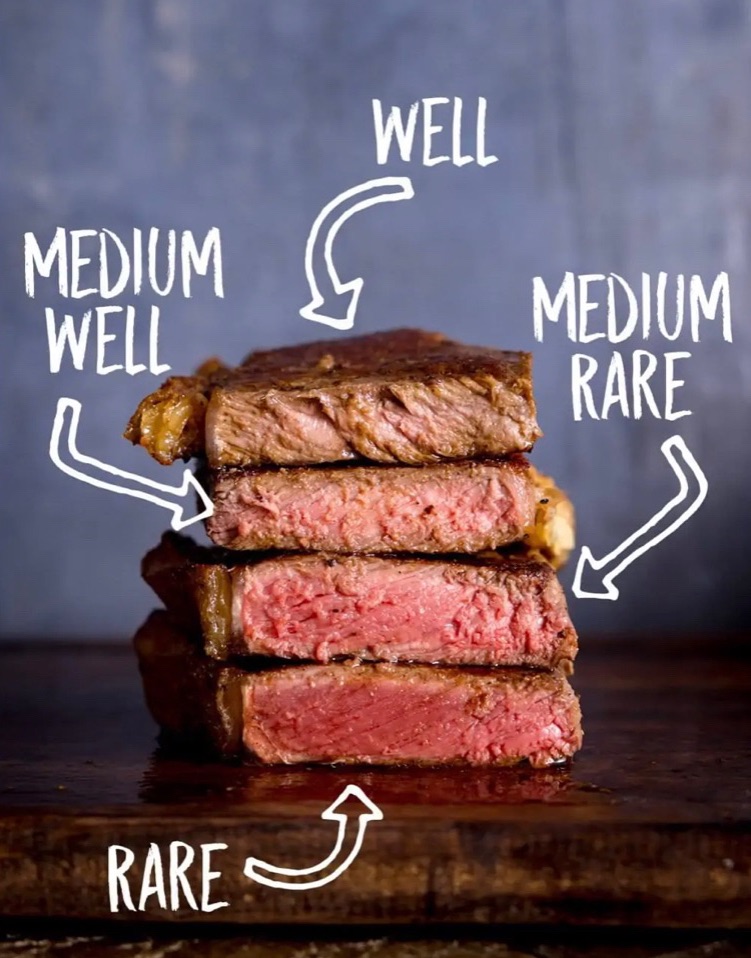
- Let’s start with the steak of course. I recommend a good quality thick (2-2.5cm cm thick) ribeye or sirloin steak with some fat running through it.
- Ribeye tends to have a chunk of fat in the middle and some smaller veins of fat (see image above).
- Sirloin just tends to just have the smaller veins of fat.
- We’re going to concentrate on those cuts, but I’ve also got a note on cooking fillet steak in the notes section of the recipe card.
- DON’T be scared of seeing fat on your steak – some of the fat renders down to help ensure a juicy steak. We also crisp up that fat when it’s in the pan. Fat is GOOD!
- What you do need to look out for is gristle – these are streaks of chewy/rubbery cartillage, that aren’t broken down during cooking. You sometimes find gristle as little wriggle lines of of-white in the steak. A little bit (that you can cut out when eating) is fine, but any more than that makes it a far less enjoyable steak.
- For cooking the steak, we also need a high smoke point oil (such as sunflower oil), plenty of salt and freshly ground black pepper, a little butter, and if you want to to add some extra flavour, a few cloves of garlic and some fresh thyme or rosemary sprigs.
- For a 2.5cm thick ribeye or sirloin, cooking to a MEDIUM level of doneness (more info further down the posts for different levels of doneness):
- After taking the steak out of the fridge to bring it too room temperature, we coat the steak in oil on both sides, then add plenty of salt and pepper on both sides of the steak too.
- Add the steak to a very hot pan – preferably cast iron.
- Cook for 4 minutes, turning EVRY MINUTE.
- During the last minute of cooking, add butter to the pan, plus a few lightly crushed, peeled garlic cloves and a couple of sprigs of thyme or rosemary. Baste the the steak with the butter during the last minute of cooking.
- Take out of the pan and leave to rest for at least 4-5 minutes before serving.
- If you like, you can serve with a delicious steak sauce (some ideas below), or top with some garlic butter.
PRO TIPS For the Perfect Steak
Type of pan:
Use a heavy-based frying pan (such as a cast iron) or a griddle pan. The retain the heat well, so the pan won’t go too cold when you add the steak to the pan. Cast iron pan also evenly distribute the heat, so you’re less likely to get hot spots, leading to uneven cooking.
Overcrowding:
Cook no more than 2 steaks at a time. If the pan is over-crowded, the heat will be reduced, meaning any liquid that comes out of the steaks won’t be able to evaporate quickly enough, and they’ll end up boiling instead of frying. That means no beautiful char, and therefore a lot less flavour.
Oil the steak:
Oil the steak, not the pan – this is so you get a nice even covering on the steak. You don’t have to worry about the oil not being hot when it goes on the steak. Our pan is going to be so hot, the oil will heat up instantly. Use a flavourless oil with a high smoke point – such as sunflower oil.
Season well:
As well as the oil, we want to season the steak generously with salt and freshly ground pepper.
Some people say that seasoning with pepper before cooking will cause the pepper to become bitter, but I have never found that.
The key is to use freshly ground black pepper that’s a little bit coarse. Don’t use fine pepper powder – that is more likely to burn.
You can make the pepper very coarse if you prefer it that way (just bash the pepper in bag with a rolling pin). Personally, I use a pepper grinder, so it’s just a little bit coarse.
You may think you’re adding too much pepper to the steak, but the flavour of the pepper ‘cooks in’ to the steak as you’re frying it, so it won’t be overwhelmingly peppery.
Steak thickness:
I tend to look for steak that is around 2cm-2.5cm thick. Any thicker than that and you will have to adjust the cooking timings, and are at risk over overcooking the outside of the steak, whilst the middle remains undercooked.
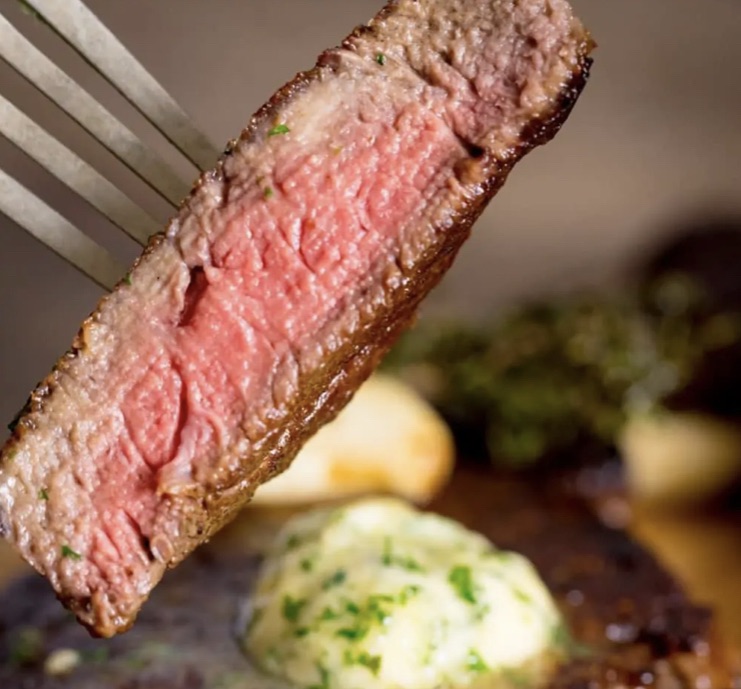
Don’t go straight from the fridge!
Cooking a steak right from the fridge is a BIG no no.
We’re cooking the steak for a short amount of time to get that perfect outside char. We really don’t want the steak to still be cold in the middle when we get to the char stage.
Type of steak:
My recommendation in most cases is to go for ribeye or sirloin steak. Look for a steak with thin veins of fat running through it. This fat will render down during cooking, resulting in a tender, juicy steak.
Try to avoid steak that has a big vein of gristle through it. No one wants to bite into that.
Also, don’t be afraid if the steak has a lovely fat strip of fat on that outside. That fat will give the steak more flavour during cooking. You don’t have to eat it (but I always nibble on a little, because it’s rather tasty).
You can of course use other cuts of steak if you prefer, but they often need different cooking times and sometimes need finishing in the oven.
I have some info below (notes section of the recipe card) on cooking fillet steak – but that one can be trickier, as it’s a lot thicker and leaner than ribeye or sirloin.
Other types of steak include rump, T-bone, flat iron, Denver, skirt and flank. Let me know if you want to info on how to cook any of these cuts in the comments below.
Even cooking:
Rather than cook one side until it’s perfectly browned (which can take a few minutes), then cook the other side for less time (so the steak isn’t overcooked), turn the steak every minute. This will help to ensure even cooking and char on both sides.
Rest the steak:
A good rule of thumb is to rest the steak for at least as long as you cooked it. This will allow the fibres to relax, and you’re steak will be juicier and more tender for it.
Rest on a slightly warm plate or wooden board.
Cooking times (for a 2cm-2.5cm thick Sirloin or Ribeye)
(Turning the steak every minute)
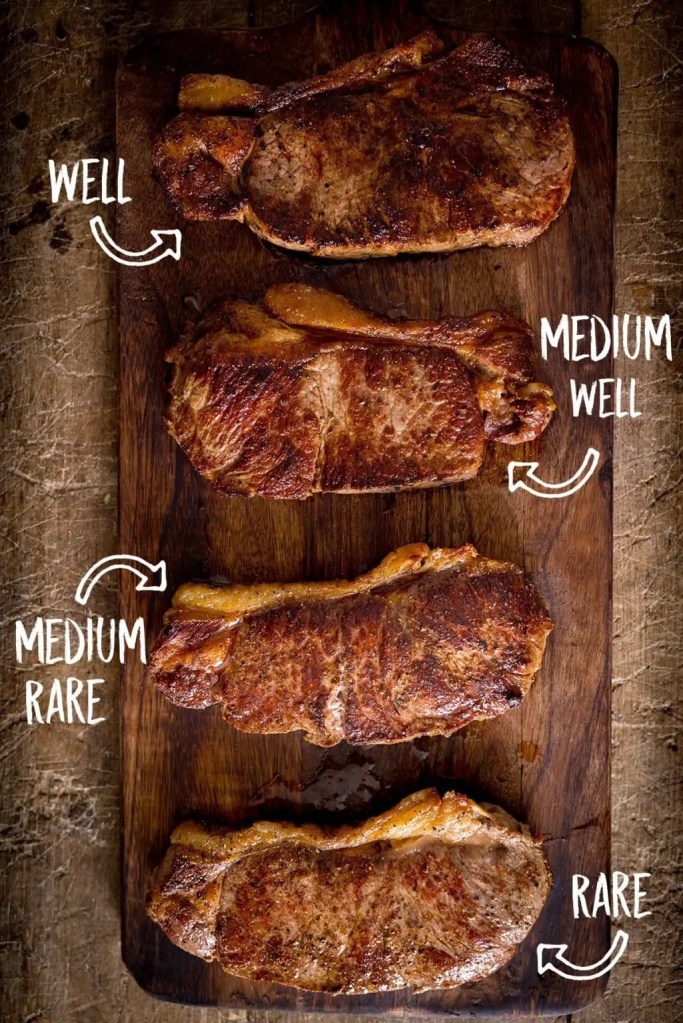
- Rare: 3 minutes total
- Medium Rare: 4 minutes total
- Medium Well: 5-6 minutes total
- Well done: 8 minutes total
Top with one of these amazing sauces

Learn more here.






 Mixed Media Magazine