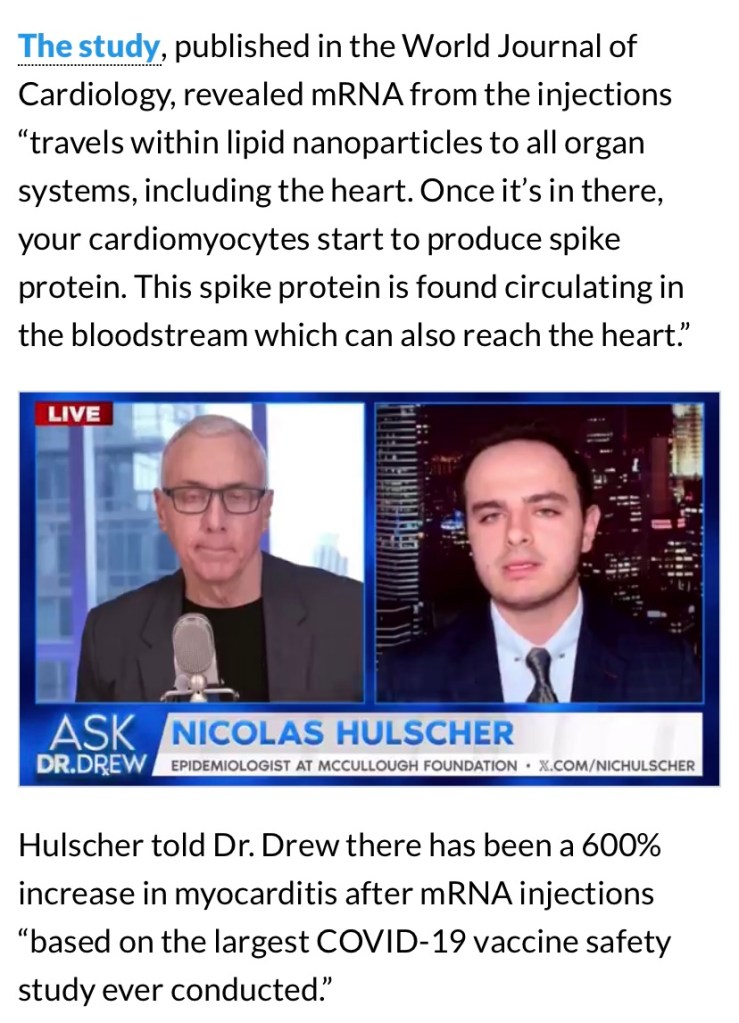
🚨WATCH: Whistleblower alleges Pfizer anticipated a cancer surge six months into the vaccine rollout, informing shareholders that cancer would be a new business focus, which has now materialized. pic.twitter.com/aCKFHUMo9q
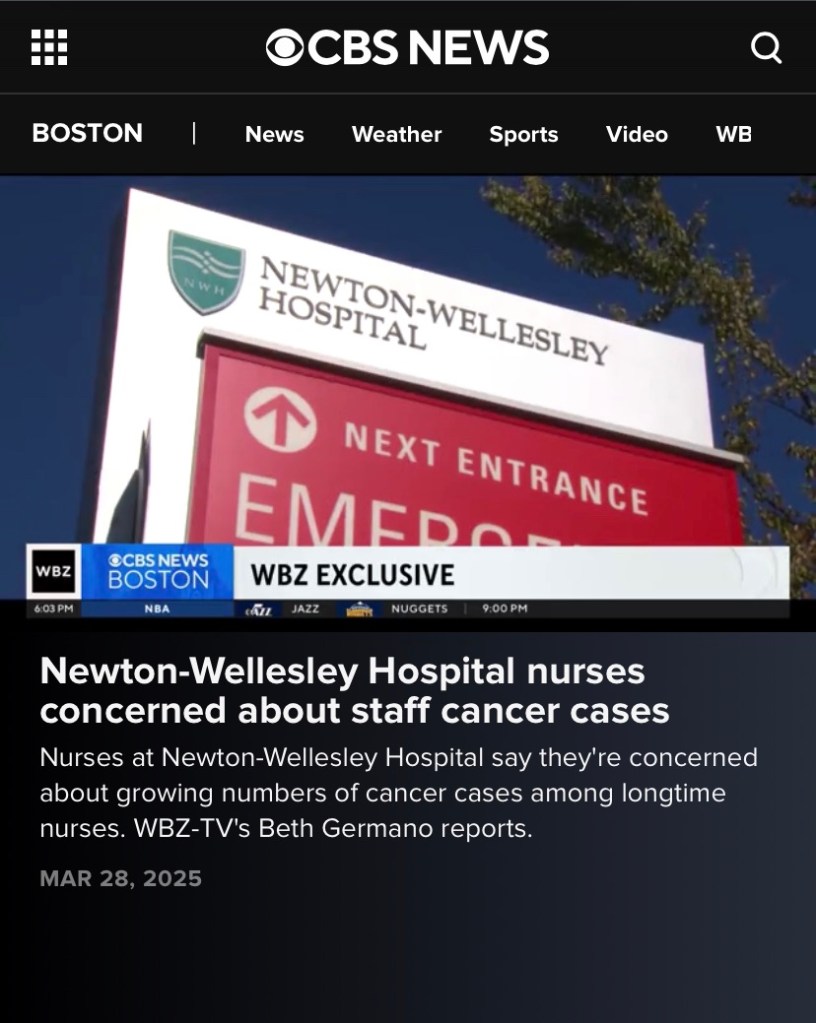
Nurses at Newton-Wellesley Hospital say they’re concerned about growing numbers of cancer cases among longtime nurses who have been working on a fifth-floor maternal care ward. “You’re going into work every day with that feeling in your gut, and it’s a lousy feeling,” a nurse who doesn’t want to be identified tells WBZ-TV.
She’s speaking out after being diagnosed with a brain tumor and says she’s not alone among her nursing colleagues. “It’s getting to the point where the number just increases, and you start saying am I crazy thinking this,” she said. “This can’t just be a coincidence.”
Nurses diagnosed with brain tumors
She claims as many as ten nurses who work on the floor have been diagnosed with different brain tumors over the last few years, some cancerous and some not. She says three have had surgery and believes the hospital has not been supportive enough.
“We want reassurance because this has not been a reassuring past few months for a lot of the staff members,” she said. “We want to feel safe, the same way we want to make our patients feel safe.”
The hospital confirms it has been investigating since December and has interviewed ten nurses, six of whom it says have differing brain tumors.
Hospital says “no environmental risk”
Mass General Brigham/Newton-Wellesley Hospital provided a statement to WBZ-TV saying an investigation found “no environmental risks.”
“After we became aware of reported brain tumors in individuals who currently or previously had worked in the same area of the hospital, we conducted an extensive investigation in collaboration with the Department of Occupational Health and Safety, Newton-Wellesley Safety Officer, radiation and pharmaceutical safety offices, and external environmental consultants.
Every staff member who came forward was given the opportunity to be interviewed by the Occupational Health and Safety team to evaluate each diagnosis in the context of their individual medical history and risk factors. To evaluate for any possible environmental exposures in that area of the hospital, comprehensive environmental assessments following CDC guidelines began in December.
The investigation found no environmental risks which could be linked to the development of a brain tumor. We presented these findings to relevant stakeholder groups, including the staff on the unit and the Massachusetts Nursing Association, and have held forums to meet with clinical and Occupational Health leaders to answer their questions. The hospital is providing the MNA with the test results from the investigation, including those of several external environmental firms.
With no work environmental risks what else could be a common cause?
In screenwriting, Enneagrams provide a powerful tool for creating well-rounded, complex characters by defining their core motivations, fears, and desires. By understanding an Enneagram type, writers can craft characters with distinct personalities, conflicts, and growth arcs that resonate with audiences. These types not only help establish how a character interacts with others but also guide their emotional journey throughout the story. Whether for a hero, villain, or supporting character, integrating Enneagram traits can add depth and authenticity to the narrative, making the character’s choices and development feel organic and impactful.
Here are the main Enneagram types with brief descriptions:
Type 1 – The Reformer: Driven by a desire for perfection and doing things the right way, often struggling with criticism and guilt.
Type 2 – The Helper: Focused on others’ needs, they seek love and appreciation, sometimes sacrificing their own well-being for others.
Type 3 – The Achiever: Motivated by success, they value productivity and image, often fearing failure or being seen as worthless.
Type 4 – The Individualist: Deeply in touch with their emotions and identity, they crave uniqueness and self-expression but fear being ordinary.
Type 5 – The Investigator: Intellectual and perceptive, they seek knowledge and understanding, often withdrawing from emotional connections to preserve independence.
Type 6 – The Loyalist: Security-oriented and committed, they seek safety and stability, often struggling with anxiety and indecision.
Type 7 – The Enthusiast: Energetic and adventurous, they seek pleasure and avoid pain, sometimes avoiding discomfort or commitment.
Type 8 – The Challenger: Assertive and strong-willed, they seek control and respect, often challenging authority and resisting vulnerability.
Type 9 – The Peacemaker: Easygoing and accepting, they value harmony and avoid conflict, often suppressing their own desires to maintain peace.
Each type offers unique possibilities for character development, conflict, and growth within a screenplay.
Just as the spirit was perpetuated by the union of man (Adam and Eve) so to, was the sin of man. We took to sin like fish to water. Removal from the Garden (heaven) was then inevitable. Earth was created to facilitate this expected situation.
Gerald Mackrell Know, Trust, Abandon
In Know, Trust, Abandon, Gerald Mackrell invites readers on a reflective journey that tackles one of humanity’s oldest questions: Is there meaning to life, or are we simply here by chance? Drawing from his Christian faith and personal curiosity, Mackrell explores both scientific and spiritual perspectives on existence, addressing doubts and reaffirming belief. His writing is not just about theological doctrine but about engaging with the complexities of faith in the modern world.
Mackrell, a retired machine tool fitter with a lifelong interest in writing, uses his book to dissect the relationship between knowledge, trust, and surrender in one’s spiritual journey. He examines the intersection of science and religion, questioning whether the universe and human life are the results of mere accident or divine intention. While he acknowledges the plausibility of scientific explanations like the Big Bang, he also argues that life’s intricate design points to a creator. His reflections draw from biblical texts, personal insights, and a deep contemplation of life’s purpose.
At its core, Know, Trust, Abandon is not about preaching but about questioning and seeking understanding. Mackrell encourages readers to explore their own spiritual paths, whether they are steadfast believers or grappling with doubt. Through his honest and thoughtful approach, he provides a space for reflection, urging readers to embrace both knowledge and faith while considering what it truly means to trust and surrender to something greater than oneself.

 Mixed Media Magazine